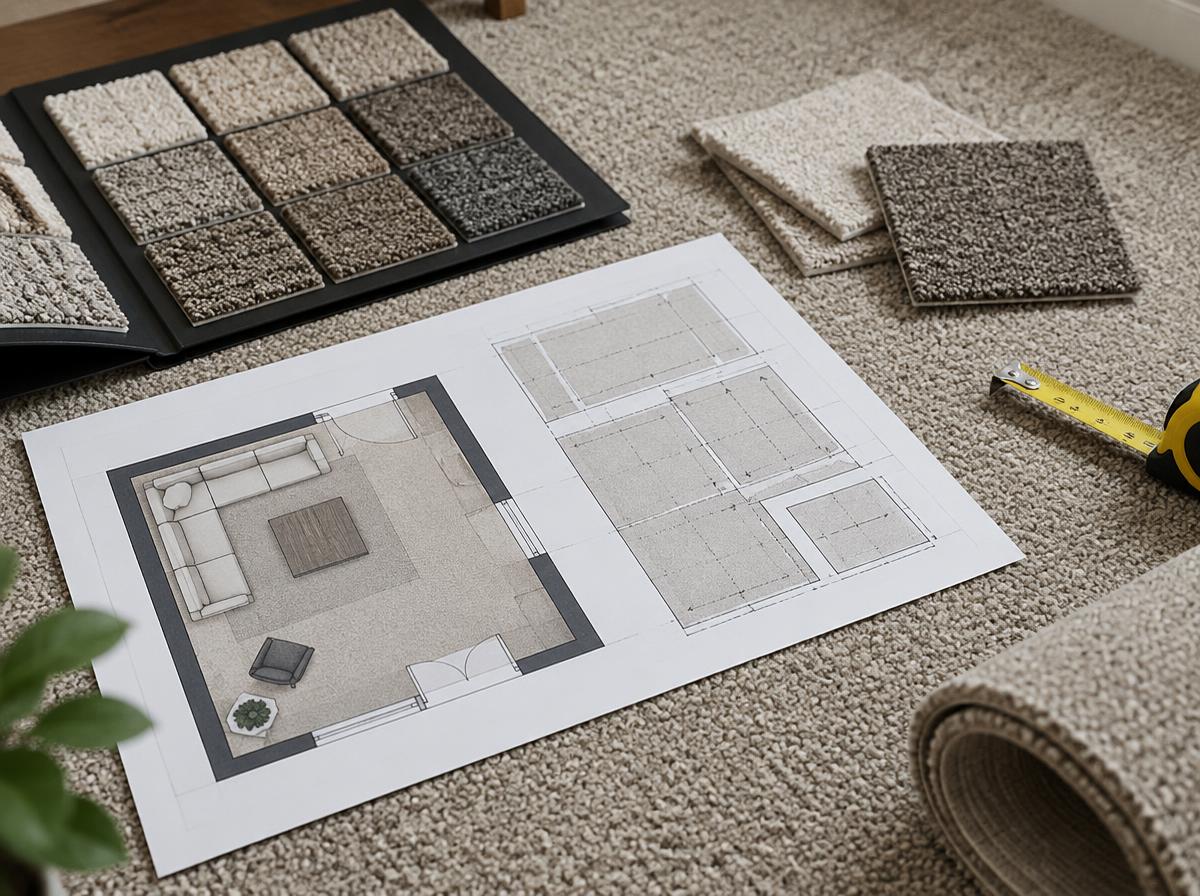
How much carpet and padding do you need?
Carpet is sold by the roll width, not just by area
Carpet typically comes in broadloom rolls 12 feet wide (about 3.66 metres), occasionally 15 feet, and rooms rarely line up perfectly with that width, so actual carpet purchased is often somewhat more than the room's raw square footage once roll-width constraints and seam placement are accounted for. This calculator starts from your room's area in square feet or square metres and applies a practical allowance for roll width, so the material estimate is closer to what you will actually need to order.
Irregularly shaped rooms, rooms with closets or alcoves, and stairs each add complexity to carpet layout that a simple length-times-width calculation does not capture, so larger or more complex spaces should lean toward the higher end of the calculator's estimate.
Padding, tack strip and stairs
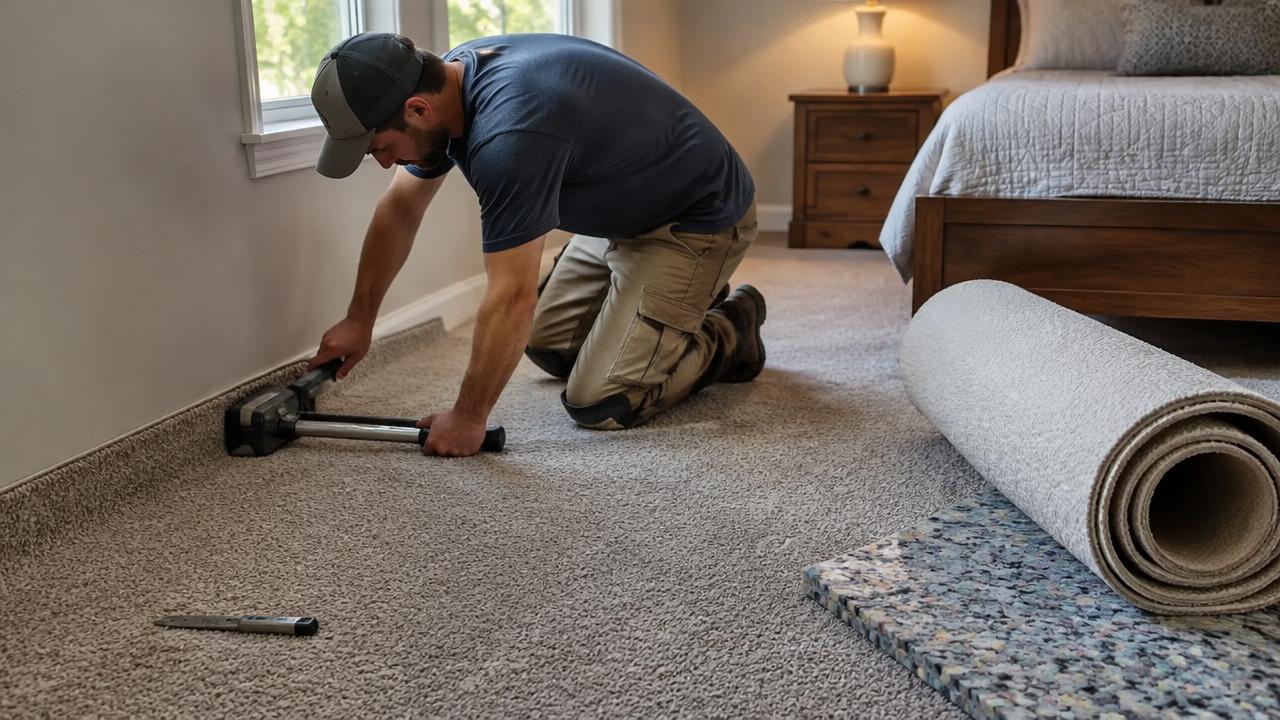
Carpet padding is purchased separately from the carpet itself and is generally measured by the same square footage as the carpet, though it is priced differently per unit area depending on its thickness and density. Tack strip, the thin wood or metal strip with angled pins that secures carpet around a room's perimeter, is priced by the linear foot or metre and is easy to forget when estimating a budget built only around square footage.
Stairs consume more carpet per step than their visible area would suggest, because the carpet wraps around the nose of each step and continues underneath, so a staircase is usually estimated separately using a per-step allowance rather than folded into the room square footage.
Waste allowance and pattern matching
A waste allowance of around 10 percent is typical for simple rectangular rooms, but patterned carpet that needs to align from one carpet width to the next at a seam can need significantly more, since pattern repeat forces extra material to keep the design lined up. Carpet with a direction to its pile also needs to be laid consistently across a room, which can add waste in irregularly shaped spaces compared with carpet that has no directional nap.
If your flooring retailer has quoted an installed price per square yard or square metre that already bundles padding and labor, use the custom amount option to enter that figure directly rather than estimating each component separately.
Comparing carpet to other flooring options
Carpet remains among the least expensive flooring options for material and installation combined, and it offers warmth and sound dampening that hard flooring does not, which makes it a common choice for bedrooms and media rooms even in homes that use hard flooring elsewhere. Use our flooring cost calculator to compare a carpeted room against the same space finished in vinyl plank, tile or hardwood.
For homes with allergy concerns or pets, ask your retailer about stain-resistant and low-pile options, since these choices affect durability and cleaning far more than they affect the basic cost calculation.
How it's calculated
Carpet comes in fixed roll widths, so we calculate how many full-width strips are needed to cover the room in each orientation, pick the more efficient layout, then add your waste allowance for seams and pattern matching. Cost uses a combined carpet-plus-pad price per sq ft or m².
Worked example
A 14 x 12 ft room with a 12 ft roll: one 12 ft wide strip 14 ft long covers it with minimal waste, about 168 sq ft, plus 15% waste ≈ 193 sq ft (about 21.5 sq yd), roughly $772 at $4/sq ft including pad.
Frequently asked questions
+Why does roll width matter so much?
Carpet can't be seamed arbitrarily; you pay for the full width of each strip cut from the roll, even if your room is narrower than the roll.
+Why is waste allowance higher for carpet than other flooring?
Pattern matching, room shape, and the need for seams in larger rooms typically mean 10-20% waste versus 5-10% for plank flooring.
+Is padding included in this estimate?
Yes, this calculator assumes a combined carpet-and-pad price; check your quote to see if pad is itemized separately.
+Should carpet seams be visible?
A good installer places seams in low-traffic areas or under furniture, and matches pile direction so seams are hard to see.
+Can I enter my own price?
Yes. Choose "Custom amount" under carpet + pad price and enter your own rate per sq ft or m².