How much paint do you really need?
Measure walls, not floors
The most common mistake when buying paint is guessing from floor area. Paint goes on walls, so what you need is the wall surface: the perimeter of the room multiplied by the ceiling height. A small bedroom with high ceilings can need more paint than a larger room with low ones. This calculator works out the wall area from your room length, width and height, then subtracts a typical allowance for each door and window, because you will not paint the glass or the door slab.
The result is shown in US gallons in imperial mode and litres in metric mode, rounded up so you are never left a few square feet short on the final wall.
Coverage rates and coats
Most interior emulsions cover roughly 350 to 400 square feet per gallon, or about 10 square metres per litre, on smooth, primed surfaces. Rough plaster, textured walls, fresh drywall and porous surfaces absorb more, so real-world coverage can be 20 to 30 percent lower. Two coats are standard for an even finish, especially when changing colour. Going from dark to light, or covering a strong red or deep blue, may require a tinted primer plus two topcoats.
Primer deserves its own calculation. New drywall, patched areas, bare wood and stained surfaces all need it. Primer usually covers a little less than topcoat, so plan for the same quantity as one coat of paint.
Choosing a paint quality
The paint quality dropdown lets you estimate the cost alongside the quantity. Budget paints are cheaper per can but often need an extra coat, which erases the saving and costs you time. Mid-range and premium paints have more pigment and better binders, giving better hiding, washability and durability — worth it in hallways, kitchens and children’s rooms. If you already know the price of the paint you want, choose “Custom amount” and enter it per gallon or per litre.
Tips for a professional result
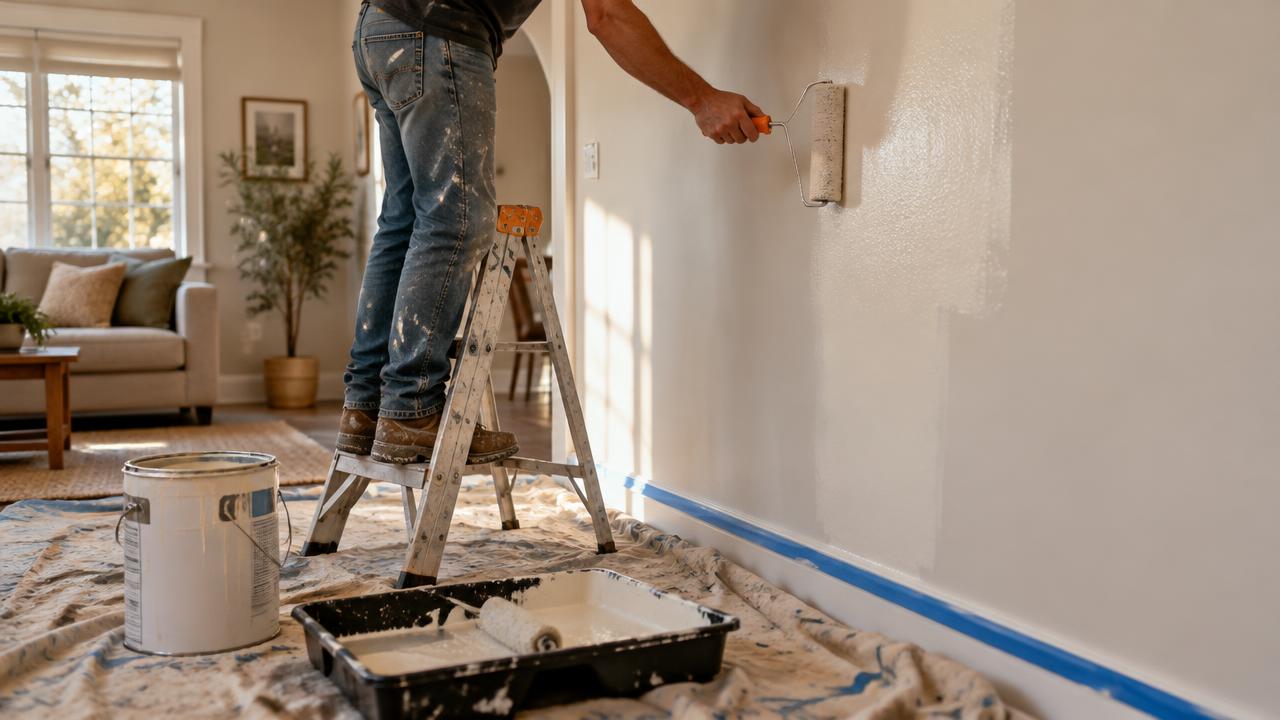
Buy all the paint for one room at once, preferably from the same batch, to avoid subtle colour differences. Ask the store to box the cans — mix them together in a bucket — if you have several. Prepare thoroughly: fill holes, sand glossy areas, wash greasy walls and protect floors with drop cloths. Cut in the edges with a quality angled brush, then roll in a W pattern while the edge is still wet to avoid lap marks.
Keep a small amount of leftover paint, labelled with the room and date, for touch-ups later. And remember that ceilings, trim and doors usually take a different paint and sheen, so calculate them separately. The figures here are estimates; always check the coverage printed on the can you buy.
How it's calculated
Wall area = perimeter × height, minus about 20 sq ft (2 m²) per door and 15 sq ft (1.4 m²) per window. One gallon covers roughly 350 sq ft per coat; one liter covers about 10 m² on smooth, primed walls.
Worked example
A 12 × 12 ft room with 8 ft walls: 384 sq ft − 20 (door) − 30 (windows) = 334 sq ft. Two coats = 668 sq ft ÷ 350 ≈ 1.9 gallons, so buy 2 gallons (about 7.5 L).
Frequently asked questions
+How much area does a gallon of paint cover?
About 350–400 sq ft per coat on smooth surfaces; one liter covers roughly 10 m². Rough or unprimed walls reduce coverage.
+Do I need two coats?
Usually yes, especially when changing colour. Two coats give even colour and better durability.
+Does this include the ceiling?
No. Add length × width for the ceiling and calculate it separately with ceiling paint.
+Should I buy extra paint?
Keep a little left over for touch-ups. Rounding up to the next full can is usually enough.