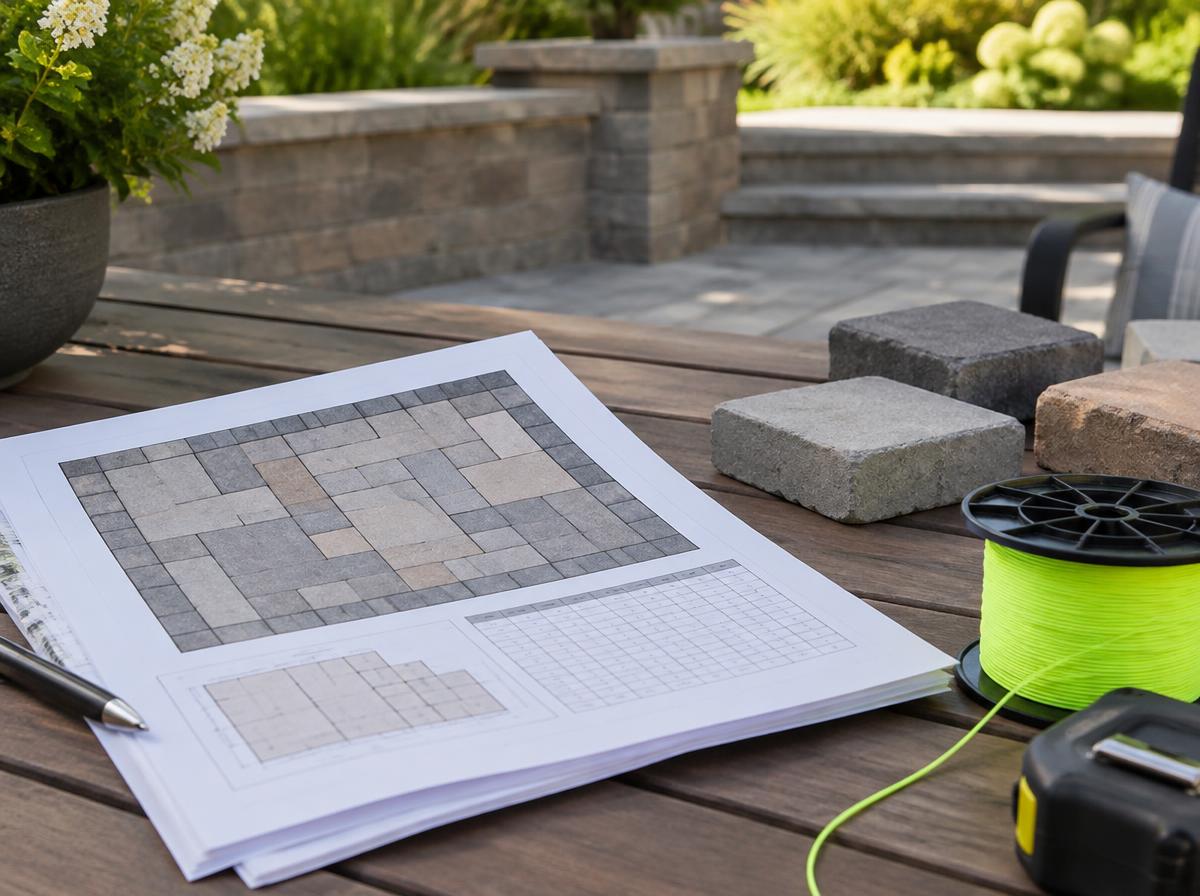
How many pavers do you need for a patio?
Start with the patio's square footage
Paver quantity begins with the total patio area, in square feet or square metres, divided by the coverage of a single paver including the joint space around it. This calculator takes your patio dimensions and your chosen paver size to estimate how many units you need, along with an approximate material cost based on price per paver or per square foot, which you can override with a custom amount if your supplier quotes differently.
Paver shape matters here too: a simple rectangular paver laid in a running bond pattern uses material efficiently, while an irregular flagstone-style layout or a herringbone pattern with cut pieces at the edges typically needs more waste allowance.
Base materials are often the bigger cost
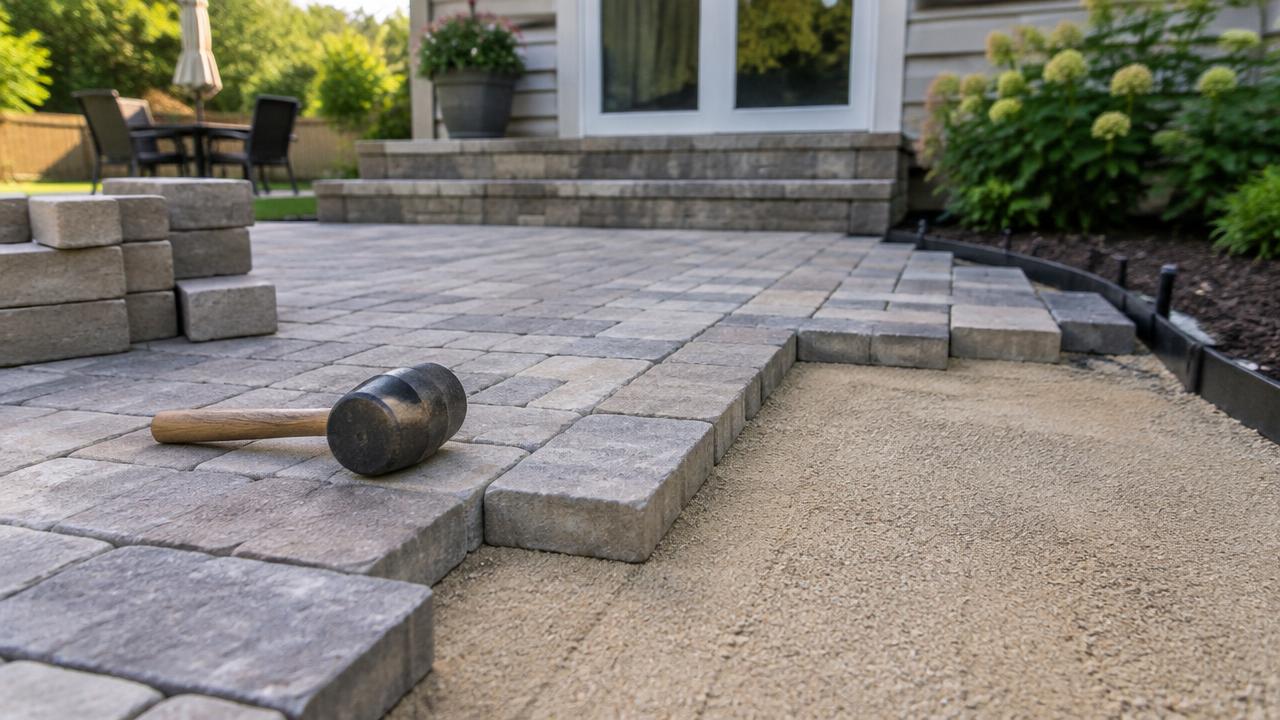
A proper paver patio needs a compacted gravel base, typically 4 to 6 inches (about 10 to 15 centimetres) deep, topped with a thin leveling layer of coarse sand, and both of these materials are priced and calculated separately from the pavers themselves. Skipping or skimping on the base is one of the most common reasons paver patios settle unevenly or develop low spots within a few years.
Edge restraints, which keep the outer row of pavers from spreading over time, are a small but easy-to-forget cost, typically priced per linear foot or metre around the patio's perimeter.
Waste allowance and cutting
Order 10 percent extra pavers for a simple rectangular patio and closer to 15 to 20 percent for a patio with curves, a fire pit cutout, or a complex pattern, since cut pavers at borders and obstacles cannot always be reused. Keeping a few extra pavers from the original order on hand is also useful for future repairs, since paver colors can be discontinued or shift slightly between manufacturing runs.
Polymeric sand, swept into the joints after pavers are set, is priced separately by the bag and is worth including in your total since it helps lock pavers in place and resist weed growth between joints.
Labor and bringing it all together
Hiring a professional to excavate, grade, and install a paver patio typically costs more in labor than the materials themselves, especially for patios that require significant excavation or drainage work. Our concrete calculator and landscaping cost calculator can help you compare a paver patio against a poured concrete slab or other hardscape options for the same outdoor space.
If your yard slopes or has drainage concerns, factor in the cost of a proper grade and possibly a drainage channel, since water pooling on a patio surface is one of the most common complaints after installation.
How it's calculated
We divide total patio area (plus waste) by the face area of one paver to get the paver count, then calculate base gravel volume from the base depth and a 1 in (2.5 cm) bedding sand layer across the same area.
Worked example
A 16x12 ft patio (192 sq ft) with 12x12 in pavers and a 4 in base: about 212 pavers after waste, roughly 2.4 cu yd of base gravel and 0.6 cu yd of bedding sand.
Frequently asked questions
+How deep should the paver base be?
4 inches (10 cm) of compacted gravel works for most patios on stable soil; use 6 inches (15 cm) on clay, poor drainage, or if the patio will see vehicle traffic.
+Do I need edge restraints?
Yes, plastic or metal paver edging around the perimeter keeps pavers from spreading and shifting over time.
+Can I lay pavers over an old concrete slab?
Yes, if the slab is sound, cracked but stable, with a thin leveling sand layer, which skips the excavation and base gravel step.
+How much extra should I order for waste?
10% covers simple rectangular layouts; order 15% or more for cuts around curves, steps or a running-bond pattern.
+Can I enter my own paver price?
Yes. Choose "Custom amount" under paver price and enter your quoted price per square foot or m².