How many rolls of wallpaper do you need?
Start with wall area, then subtract openings
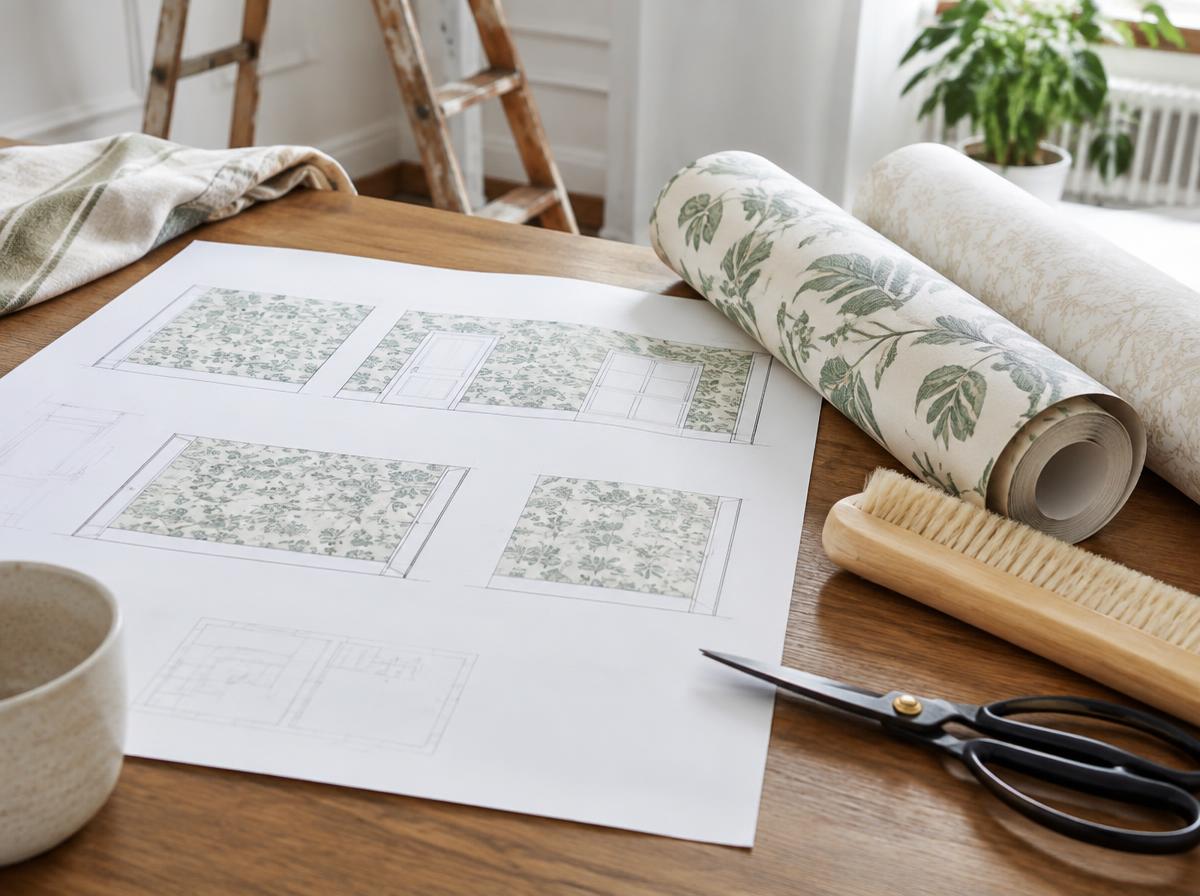
Calculating wallpaper quantity starts the same way as a paint estimate: measure the perimeter of the room and multiply by the ceiling height to get total wall area, then subtract the area of doors and windows you will not be papering over. This calculator takes those room dimensions and works out the usable wall area before converting it into a roll count, so you are not buying paper for surfaces you will never cover.
Unlike paint, wallpaper is sold in fixed-size rolls rather than by volume, so the conversion from area to rolls depends heavily on the size of the roll and the pattern printed on it.
US rolls versus European rolls
Roll sizes are not standardized worldwide, which catches out a lot of first-time buyers. A standard American double roll is typically around 27 inches wide and 27 feet long, while a standard European roll is usually about 21 inches, or roughly 53 centimetres, wide and around 33 feet, or about 10 metres, long. Always check the width and length printed on the specific roll you are buying rather than assuming a standard size, since specialty and designer papers often come in their own dimensions.
The calculator lets you switch between imperial and metric, and adjusts the roll size assumption to match, but you should confirm the exact roll dimensions on your chosen wallpaper's label before finalizing your order.
Pattern repeat eats into your coverage
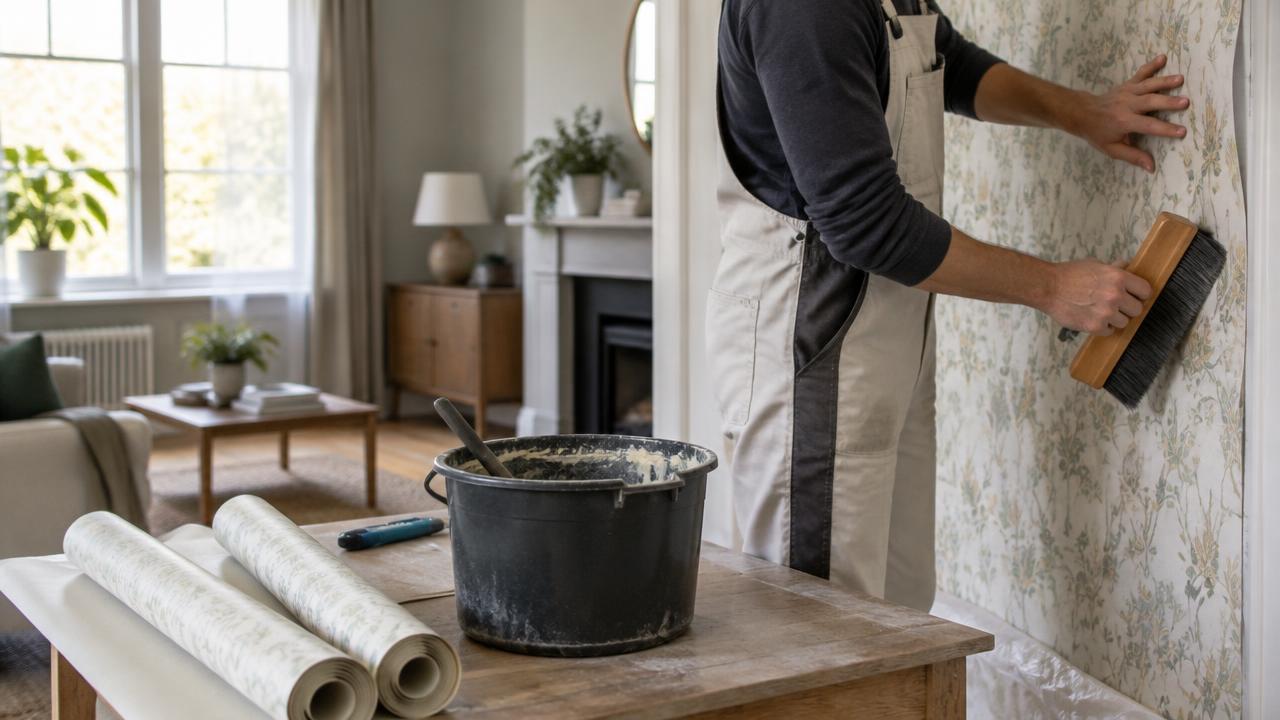
A plain or textured wallpaper with no visible repeat gives you close to the full length of the roll as usable coverage. A patterned wallpaper with a large repeat, however, requires each strip to be aligned with the one before it, which means cutting off and discarding a portion of each length to match the pattern at the seams. The larger the repeat, printed in centimetres or inches on the roll label, the more waste you should expect, sometimes losing 20 percent or more of the roll's length on a large-scale pattern.
Because of this, always buy a little more than the bare calculated minimum, and buy all your rolls from the same batch number, since colour can vary slightly between print runs.
Rounding up and budgeting
This calculator rounds up to whole rolls, since wallpaper cannot be purchased in fractions, and it is always better to have one roll left over than to run short mid-project and discover your pattern's batch is no longer available. If you have a specific price per roll from a retailer, enter it with "Custom amount" to get an accurate material cost alongside the quantity.
Pattern matching, trimming technique and hanging method all affect the final amount of paper used, so for an expensive or intricate paper, confirm quantities with an experienced decorator before ordering.
How it's calculated
We use the strip method that paperhangers use: divide the wall width by the roll width to get the number of strips, subtract part of a strip for each door or window, then work out how many full-height strips (height + trim allowance + pattern repeat) each roll gives.
Worked example
40 ft of wall at 8 ft high with 2 openings and no repeat: 40 ÷ 1.71 ft = 24 strips, minus 2 = 22. Each strip is 8 ft 4 in, so a 66 ft US double roll gives 7 strips → 4 double rolls.
Frequently asked questions
+What is pattern repeat?
The vertical distance before the pattern starts again. Larger repeats mean more waste per strip, so you need more rolls.
+Should I buy an extra roll?
Yes. Buy at least one spare from the same batch (lot number) for mistakes and future repairs.
+What is the difference between US and European rolls?
US wallpaper is often sold priced per single roll but packaged as double rolls. European rolls are usually about 0.53 × 10 m.
+Do I subtract doors and windows?
Partly. You still need short strips above and below them, so we subtract roughly three-quarters of a strip per opening.
+Can I enter my own roll price?
Yes. Choose "Custom amount" under price per roll.